
Solar in Hobart, and up to $4,420 in 2026 rebates
Check what you'd save and who to trust, in about 30 seconds.
Hobart gets plenty of sun, and the 2026 federal rebate now covers a big chunk of a solar and battery install. Most homeowners never find out their actual number, so they keep paying their retailer instead. Put in your postcode and we'll show you what you qualify for, then match you with vetted local installers. No calls until you ask.
30-sec · Free · No obligation
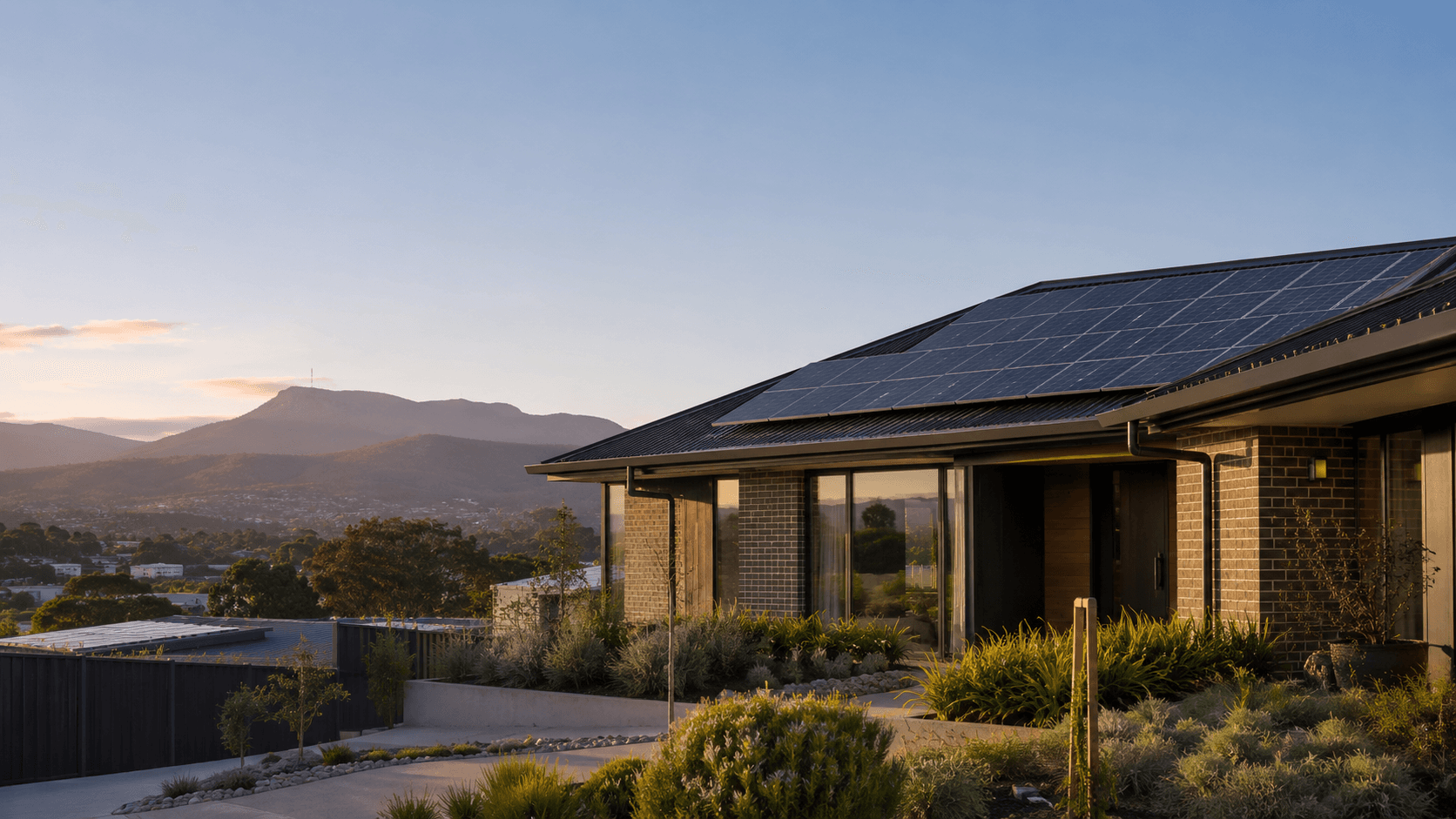
Local snapshot
Solar in Hobart, by the numbers
Hobart is the lowest-sun capital in Australia, 3.6 peak sun hours per day, roughly 20% less than Sydney, and that's the single fact every honest solar quote in Tasmania has to start from. A 6.6kW system here generates around 8,700 kWh per year, vs ~11,000 in Sydney. The compensating factors: Tasmania's wholesale electricity is dominated by hydro, but retail prices are still high enough that solar self-consumption pays off in under five years for most households; new retailers (Solstice, CovaU, 1st Energy) have pushed FiTs into the 8.8-10c/kWh range, breaking Aurora Energy's long-standing 9c monopoly position; and Tasmania's Energy Saver Loan ($1,500 low-interest) covers the upfront gap. North-facing roofs matter more here than anywhere else, east/west drops generation by an additional 8-12% vs the mainland equivalent.
Why Solar
What solar does for a Hobart home
Lower bills, and a home that's worth more.
In Hobart, a solar system turns your roof into a small power station. You use what it makes, sell back what you don't, and lean on the grid a lot less. Here's what that means for your household.

Smaller power bills
You draw less from the grid and more from your own roof, so the quarterly bill drops. Hobart's sunny days do most of the work.

Cleaner energy
Every kilowatt you make on the roof is one less burned somewhere else. Cleaner power for your place, and for Hobart.
More resale value
Buyers pay more for a home that comes with low power bills built in, so solar tends to lift what your place is worth.
30-sec · Free · No obligation
How It Works
How a solar system works
Sunlight in, power out.
Panels on the roof turn sunlight into electricity, an inverter makes it usable in your home, and a meter tracks what you send back to the grid. Hobart's sunny climate means the panels earn their keep, and the 2026 rebates take a solid chunk off the upfront cost.
30-sec · Free · No obligation
Investment
What it costs, and what it saves
The upfront cost pays itself back.
The upfront cost is real, but it comes back. You save on every bill, and you earn a feed-in credit for the power you export to the grid. Add the 2026 rebates and the payback usually lands in a few years, not decades.
30-sec · Free · No obligation
Process
How the install happens
Getting solar on your Hobart roof takes three steps.

Step 01
Assessment
We size the right system for your roof, your usage, and your budget.

Step 02
Installation
A vetted local installer fits the system, safely and to schedule.

Step 03
See the savings
The panels switch on and your next power bill starts shrinking.
30-sec · Free · No obligation
Incentives
Government Incentives and Policies
The rebates do a lot of the heavy lifting.
Hobart homeowners can stack the 2026 federal rebate on top of any state support that applies, which knocks a big chunk off the upfront price. We work out exactly what you're eligible for.
30-sec · Free · No obligation
FAQ
Solar Hobart FAQs
Before you buy