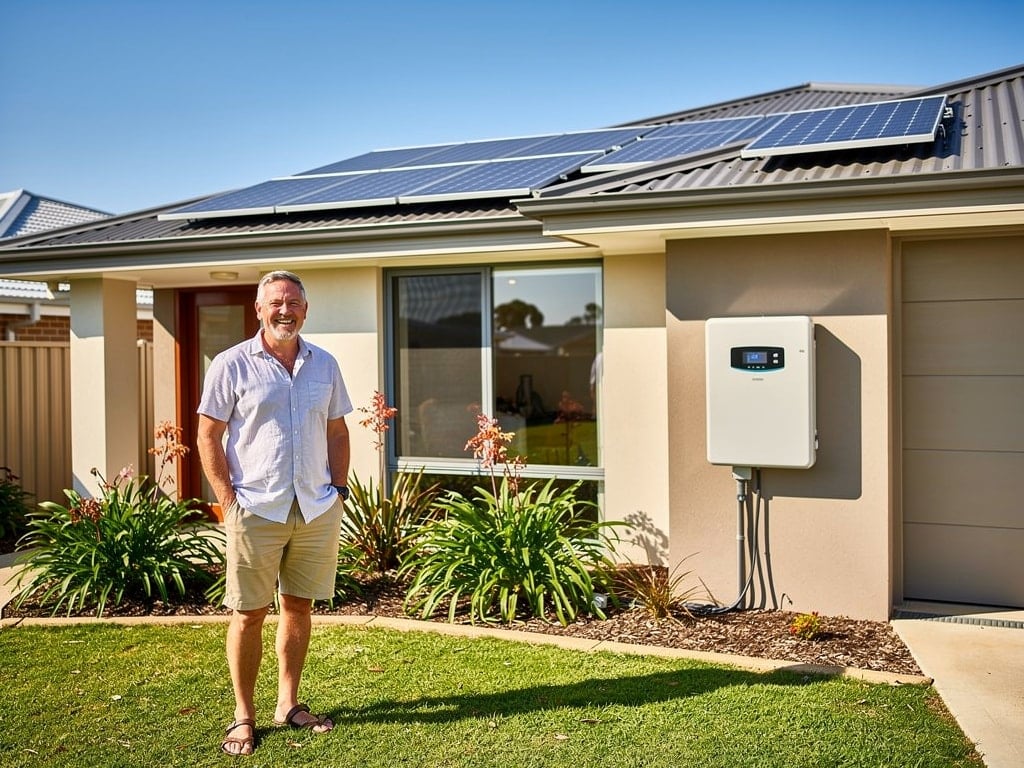


Quick answer: solar feed-in tariffs in 2026 run about 3 to 12c per kWh depending on your state and retailer. NSW and Queensland lead (top plans pay 10c), Victoria sits around 4 to 8c after scrapping its minimum in July 2025, and South Australia is lower at 5 to 6c. But here's what most people get wrong: a high feed-in tariff often comes with a high usage rate, so chasing the biggest export number can leave you worse off.
The bigger lever is using your own power instead of exporting it. This guide compares the real 2026 rates by retailer and state, and shows you how to pick a plan that actually saves money. Verified July 2026.
Feed-in tariffs at a glance (2026)
Feed-in tariffs by state and retailer
These are standard (non-time-of-use) export rates from competitive retailers in mid-2026. Rates change often, so treat this as a July 2026 snapshot, and always check the plan's usage rate too, not just the export rate.
See your savings with the right plan
30 secs · Free · No obligationBest feed-in tariff in Queensland (2026)
Quick answer: in south-east Queensland (Brisbane, the Gold Coast and Sunshine Coast) feed-in tariffs are fully deregulated with no government minimum, so retailers set the rate. Standard plans pay about 3 to 10c/kWh in 2026, and the highest headline rate right now is a tiered up to 22c/kWh from Origin on a capped bonus tier.
Regional Queensland (the Ergon network) is different: it has a regulated feed-in tariff, set at 6.006c/kWh from 1 July 2026, down from 8.66c the year before.
Best feed-in tariff in NSW (2026)
Quick answer: New South Wales feed-in tariffs are deregulated, so there is no state-mandated minimum and retailers set their own rate. The best competitive plans pay around 10c/kWh in 2026, and most standard offers sit below that.
As everywhere, the plan with the lowest usage rate usually beats the one with the flashiest export rate, because most homes buy more power than they export. Compare the usage rate and the feed-in rate together, not the export number alone.
How a feed-in tariff works
A feed-in tariff is what your retailer credits you for solar power you send back to the grid. When your panels make more than your home is using, the extra flows out and your retailer pays you the feed-in rate for it.
It's the mirror image of your usage rate, which is what you pay to buy power from the grid. In 2026 the usage rate (25 to 45c/kWh) is three to eight times higher than the feed-in rate. That gap is the whole game.
Why feed-in tariffs keep falling
Feed-in rates were 15 to 20c a few years ago. They've fallen because so many homes now export solar in the middle of the day that daytime power is worth very little to the grid, and some networks have started charging for exporting at peak solar times.
The trend isn't reversing. So a system that pays for itself by exporting is a worse bet each year, while a system built around using your own power keeps getting better.
Does a high feed-in tariff matter?
Less than the ads make out. A headline 12c feed-in tariff sounds great, but retailers often pair it with a higher usage rate or a cap on how much you can claim. If you buy more power than you export (most homes do), a high usage rate costs you more than a high feed-in rate saves.
The plan that wins is usually the one with the lowest usage rate and a fair feed-in tariff. The biggest headline export rate rarely comes out ahead once you add up a full year, so run the numbers on your actual usage.
Where the real money is: self-consumption
Every kWh you use from your own roof is worth the usage rate you avoid (25 to 45c). Every kWh you export is worth the feed-in rate (5 to 10c). So using your own power is worth three to eight times more than selling it.
That's why timing your big loads for daylight (pool pump, washing, dishwasher, EV charging) beats chasing a feed-in tariff, and why a battery, which shifts your daytime solar into the evening, is now the biggest single lever on your bill. A battery turns 8c export power into 30c-plus savings.
Check your rebate and see if a battery pays off
30 secs · Free · No obligationFrequently asked questions

Steve Hill
Steve Hill is a renewable-energy executive with a deep background in Australian solar and energy efficiency, spanning consulting, project management and business development. He founded Elite Smart Energy Solutions, a Clean Energy Council Approved Retailer focused on smarter, lower-cost energy for homes and businesses. Steve contributes to Energy Matters, one of Australia's longest-running solar publications, and has appeared on its Road to Zero podcast. He helps Australian homeowners cut through the noise on rebates, batteries and going solar.