
Solar in Melbourne, and up to $4,890 in 2026 rebates
Check what you'd save and who to trust, in about 30 seconds.
Melbourne gets plenty of sun, and the 2026 federal rebate now covers a big chunk of a solar and battery install. Most homeowners never find out their actual number, so they keep paying their retailer instead. Put in your postcode and we'll show you what you qualify for, then match you with vetted local installers. No calls until you ask.
30-sec · Free · No obligation
What homeowners say about us
4.9★★★★★from 29,000+ Australians helped“They explained the different government incentives and potential savings in a way that was easy to understand.”
“An easy process to fill out online, and it helped me find out quickly which rebates I qualified for. The service guys had great knowledge. The experience was seamless.”
“Excellent product and service, would recommend them.”
“Thank you for your wonderful and helpful service, great product.”
“Really happy with the service, love the product.”
Local snapshot
Solar in Melbourne, by the numbers
Melbourne sits in STC Zone 4, the lowest of the four federal rebate zones, so the headline STC discount is smaller than in any other capital. The compensation: Victoria's Solar Homes Program ($1,400 solar rebate; the separate battery loan closed in May 2025) and one of the most competitive retail FiT markets in the country, with the top three retailers (EnergyAustralia, AGL, ENGIE) all paying 8c/kWh on standard plans. Melbourne's 3.8 average peak sun hours is the second-lowest of the capitals, which pushes payback closer to four years than three, but it also means a Melbourne 6.6kW system is the cheapest of the capitals to break even relative to retail electricity prices. Roof orientation matters disproportionately here; west-facing arrays now often beat north-facing for self-consumption against time-of-use tariffs.
Local numbers
What the rebate looks like in Melbourne
Worked out from the Clean Energy Regulator's own postcode data, so you can check it before anyone quotes you.
Source: Solar Incentives rebate methodology, updated 15 May 2026.
Source: CER postcode zone table, checked 24 September 2026.
Worked out as kW × zone rating × deeming years, rounded down. Source: CER, checked 24 September 2026.
Source: CER small-scale installation postcode data, all years, as at 31 August 2026. Recent months are still being reported.
How It Works
How a solar system works
Sunlight in, power out.
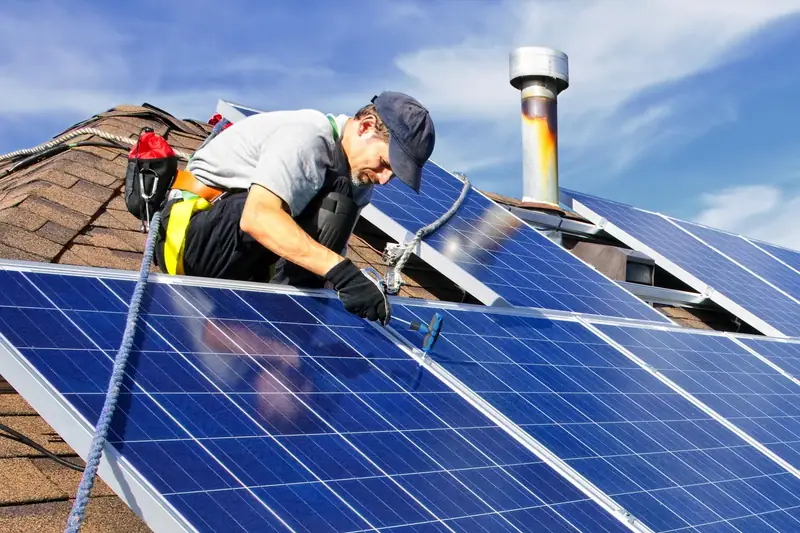
Panels on the roof turn sunlight into electricity, an inverter makes it usable in your home, and a meter tracks what you send back to the grid. Melbourne's sunny climate means the panels earn their keep, and the 2026 rebates take a solid chunk off the upfront cost.
Investment
What it costs, and what it saves
The upfront cost pays itself back.
The upfront cost is real, but it comes back. You save on every bill, and you earn a feed-in credit for the power you export to the grid. Add the 2026 rebates and the payback usually lands in a few years, not decades.
Process
How the install happens
Getting solar on your Melbourne roof takes three steps.

Step 01
Assessment
We size the right system for your roof, your usage, and your budget.

Step 02
Installation
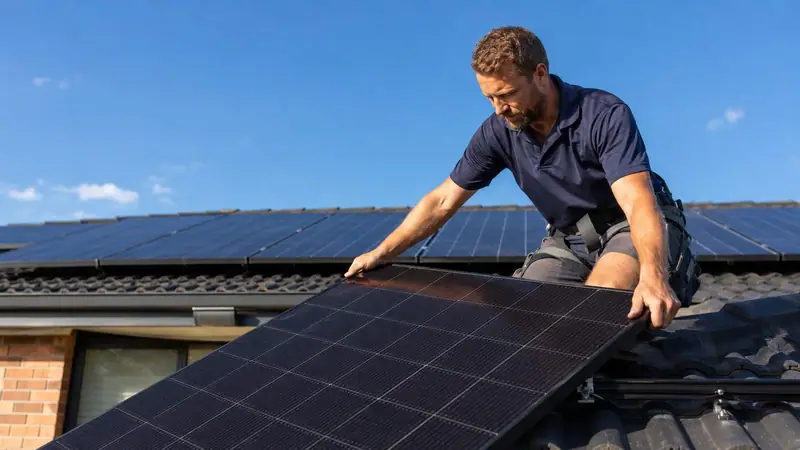
A vetted local installer fits the system, safely and to schedule.

Step 03
See the savings
The panels switch on and your next power bill starts shrinking.
Incentives
Government Incentives and Policies
The rebates do a lot of the heavy lifting.
Melbourne homeowners can stack the 2026 federal rebate on top of any state support that applies, which knocks a big chunk off the upfront price. We work out exactly what you're eligible for.
30-sec · Free · No obligation
FAQ
Solar Melbourne FAQs
How much is the solar rebate worth in Melbourne in 2026?
Melbourne (postcode 3000) is in STC Zone 4, rating 1.185. A 6.6 kW system installed there in 2026 creates 39 small-scale technology certificates (STCs), and your installer takes their value off the quote. The dollar amount moves with the certificate price on the day, so your free check works it out for your address.
What changes for Melbourne on 1 January 2027?
The STC deeming period drops by a year, so the same 6.6 kW system in 3000 creates 31 certificates instead of 39. The federal battery discount steps down on the same day. If you're comparing quotes, it's worth knowing which side of that date your install lands on.
Is there a Victoria rebate on top of the federal one?
Victoria still runs the Solar Homes rebate, worth $1,400 off a solar system in 2026. The separate Solar Victoria battery loan closed in May 2025, so batteries are federal-only.
How many homes in Melbourne already have solar?
The Clean Energy Regulator has recorded 33,811 rooftop solar systems and 4,594 home batteries in 3000, 3030, 3170, 3175 and 3199, across all years, as at 31 August 2026. Recent months are still being reported, so the real number is a little higher.
What feed-in tariff can Melbourne homes get?
The export rates we track for Melbourne: EnergyAustralia at 8c/kWh; AGL at 8c/kWh; ENGIE at 8c/kWh. Rates are set per plan and change, so check yours before you size a system.
Before you buy