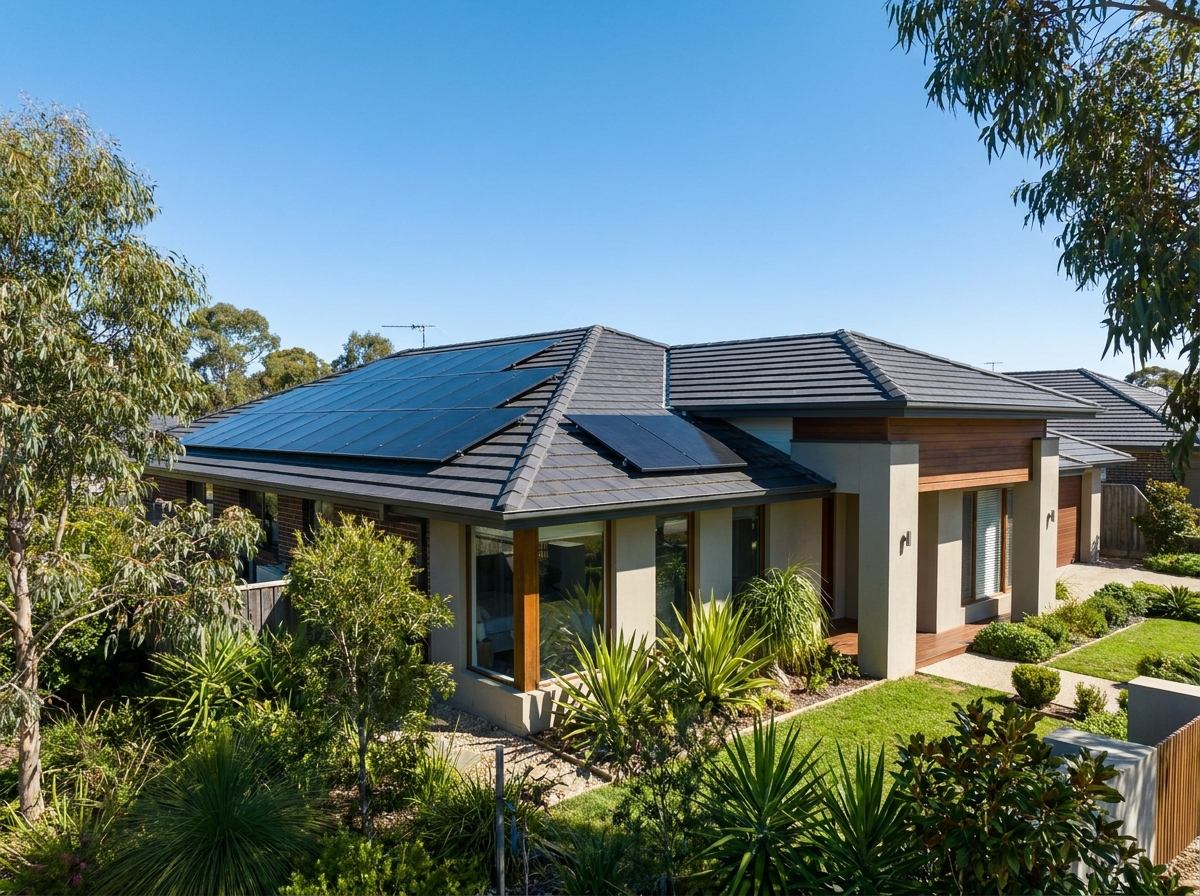

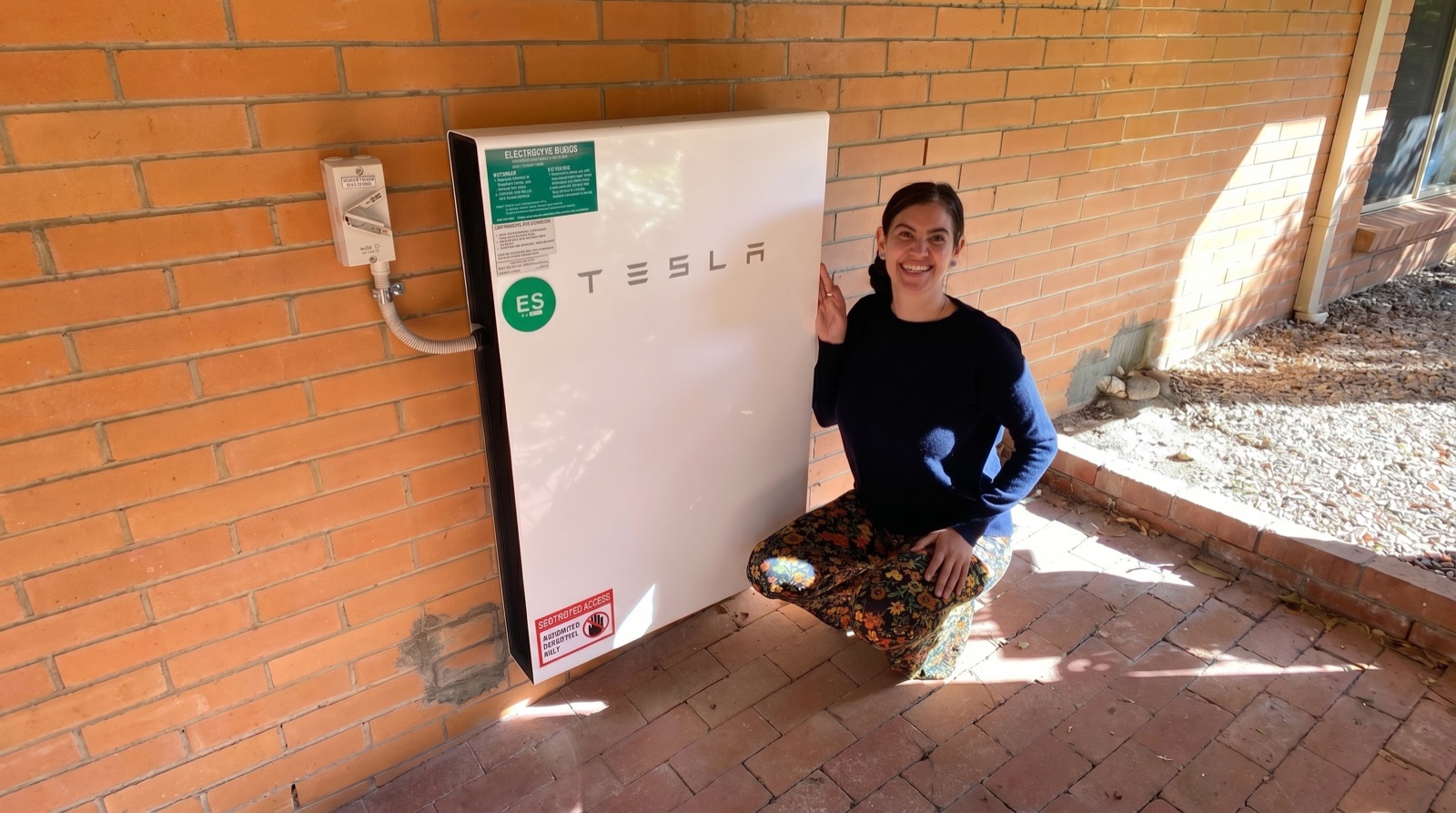
Your solar panels work hard all day. Then the sun goes down, your house switches to the grid, and you buy back power at the worst price of the day, right through the evening peak. A battery stores your own cheap daytime power for that window instead.
The catch used to be the upfront cost. The federal Cheaper Home Batteries Program changed that in 2025. It takes thousands off a battery at the point of install, in every Tasmanian postcode, with no income test.
Two things to know. Tasmania's interest-free Energy Saver Loan Scheme closed on 1 September 2025, so the federal rebate is the one that matters here. And the federal rebate now steps down every 6 months, so the amount you can claim is the highest it will be today.
Here is exactly what Tasmanian homes can claim in 2026, and how to see your number in 30 seconds.
Solar rebates in Tasmania (2026)
Quick answer: Tasmania has two federal rebates in 2026. The STC rebate takes roughly $1,600 to $2,200 off a 6.6kW solar system, applied as an upfront discount at install. The Cheaper Home Batteries rebate takes about $2,700 off a 10 kWh battery. Tasmania's state Energy Saver Loan closed in September 2025, so these federal rebates are what's on the table. Calculate your solar STC rebate below.
Check your battery price by size
Pick your home size and the check returns your after-rebate battery price for your TAS postcode. It reads the live federal rebate, so the number is current today.
At a glance
What every TAS home gets (federal)
The federal Cheaper Home Batteries Program applies in every TAS postcode. A 10 kWh battery in Hobart gets up to around $2,700 off at install. The exact figure depends on your battery's usable size and the current certificate price, so the check gives you your real number.
The rebate is paid per usable kWh and tapers as the battery gets bigger. Most home batteries sit in the top band. Bigger is not always better value once you pass about 14 kWh, which the sizing check accounts for.
The federal STC factor by install period. The rebate is a number of certificates (STCs) per usable kWh, and that per-kWh factor falls on a legislated timetable. This is the Clean Energy Regulator schedule, applied to the first 14 kWh of usable capacity, and it is the same in every state:
What that works out to in dollars, by battery size. Approximate federal discount at the current (1 May to 31 Dec 2026) rate, off the invoice. The same figures apply Australia-wide because the battery rebate is federal, not zone-rated. Your exact number depends on the certificate price on the day, and the 30-second check returns the live figure.
Figures are indicative and rounded, not a quote. The 14 to 28 kWh portion is subsidised at about 60% and 28 to 50 kWh at about 15%, which is why the per-kWh value tapers on the larger sizes.
Full federal-side detail in the pillar guide: Battery Rebate Australia 2026.
Why Tasmania has no state finance now
Tasmania ran an interest-free Energy Saver Loan Scheme, worth up to $10,000 toward energy upgrades. It closed on 1 September 2025, and the state has not replaced it with battery finance. So in 2026 the federal rebate is the only battery subsidy in Tasmania.
Some older guides still list that loan as open. It is not. If a quote relies on a Tasmanian state loan to make the numbers work, check the dates before you sign.
The maths still works. Tasmania has high retail electricity prices, so the power a battery saves you from buying back is worth more here than in cheaper states. The check shows your federal number for your exact postcode.
See your TAS after-rebate battery price
30 secs · Free · No obligationDo you qualify?
Most Tasmanian homes do. You qualify for the federal rebate if you have solar (existing or new), install a battery between 5 and 100 kWh through an accredited installer, and pick a battery on the approved product list. There is no income test, and the battery must be VPP-capable, which most approved batteries already are.
Hobart plus regional centres like Launceston, Devonport and Burnie are all in. Tasmania's lower sun hours mean roof orientation matters, so a north-facing array gets the most out of a battery. The 30-second check confirms your postcode either way.
Worked example: 10 kWh battery in Hobart
Hobart home, existing 6.6 kW solar, adding a 10 kWh battery to cover the evening peak.
First-year bill savings in Hobart run about $800 to $1,200. Generation is lower than the mainland, but high retail prices and the value of stored power balance it out. Payback runs a bit longer here, then stored power for the life of the battery.
Your home is not the example. The check uses your postcode, your bill and your roof, and returns your real after-rebate number.
Why waiting costs you
The rebate steps down every 6 months now, and the next cut lands on 1 January 2027. Waiting does not get you a better deal. It gets you a smaller rebate and another winter of full-price power bills.
Hobart install lead times run 6 to 10 weeks because the installer pool is smaller, and regional Tasmania can take longer, so a signed contract by late October 2026 locks in today's rate. The check is the fastest way to see your number and whether you qualify.
Check your TAS rebate before the next step-down
30 secs · Free · No obligationFrequently asked questions

Joe White
Joe has over five years of experience in the renewable energy sector. Based in Australia, he is dedicated to advancing sustainable energy solutions to benefit both the environment and local communities. In his spare time, Joe loves to surf and take his dog, Mitchy, on road trips to explore the road less traveled.