
Quick answer: the federal rebate (STCs under the Small-scale Renewable Energy Scheme) takes thousands off a business solar install today, on any system up to 100kW. On 5 August the government announced the scheme will cover systems up to 1MW from 1 October 2026, which cuts install costs on the bigger systems by about 20%.
Most businesses don't pay cash either way. The rebate comes off the invoice, finance covers the rest at $0 upfront, and the power bill savings cover the repayments. This guide shows what your business type can claim and what it really costs. Verified August 2026.
Check what your business can claim
What changed on 5 August
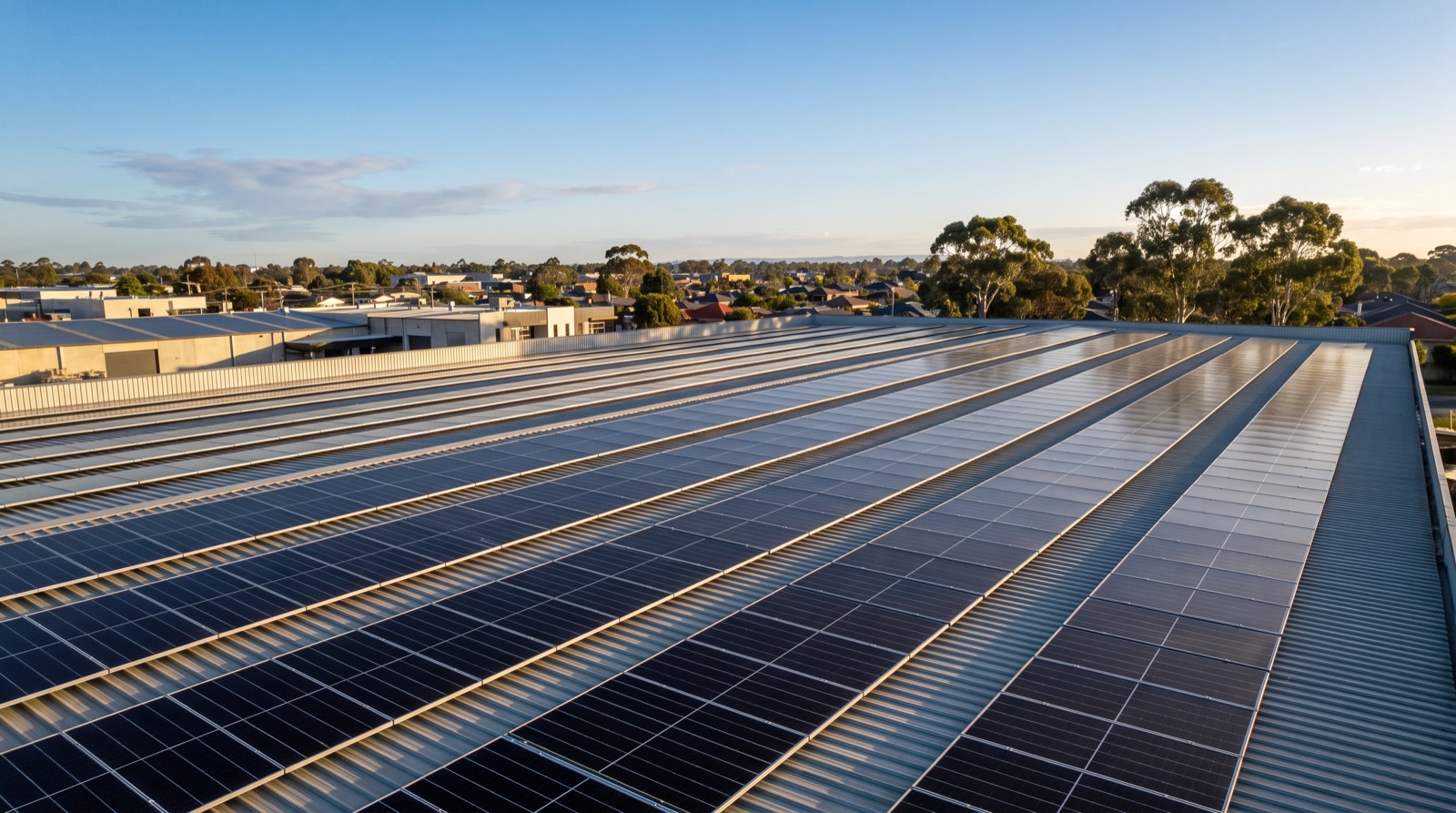
For years the federal rebate stopped at 100kW. Anything bigger got a different scheme (LGCs) that pays out slowly over years instead of upfront. That's why so many warehouses and factories with huge roofs never bothered.
On 5 August the government announced the fix. From 1 October 2026, the upfront rebate covers systems up to 1MW. The government's own examples: about $68,000 off a 250kW system and about $232,000 off an 850kW system, roughly 20% off the install price.
One more thing worth knowing: the rebate isn't a cheque in the mail. Your installer claims it and takes it straight off the invoice, so the price you're quoted is already thousands under the sticker price.
What solar costs by business type
Roof size and daytime power use decide your system size, and system size decides your rebate. Rough 2026 numbers, after the federal rebate, before any state extras:
Why the payback is faster than home solar: a business burns power at the exact hours the panels make it. A cafe's fridges, an office's air-con and a factory's machines all run through the middle of the day, so almost nothing gets exported at a few cents. It offsets grid power you'd have paid 25 to 40c for.
The instant asset write-off can sweeten the tax side as well. That one's between you and your accountant, and it stacks on top of the rebate, not instead of it.
How $0 upfront works
Most commercial installs in 2026 are financed, and the maths is simple. Say a 50kW system saves your business around $1,500 a month on power. Finance repayments on the after-rebate price run less than that. So the system pays its own way from month one, and you put in nothing to start.
The rebate, the finance and your own bill savings do the paying, so nothing comes out of your pocket to start. Anyone selling it as "free solar" is glossing over the finance part, and that's worth knowing before you sign. After the finance term (usually 3 to 5 years) the savings are all yours, and commercial panels are warrantied for 25.
State extras (VIC especially)
Victoria runs its own discount for business solar on top of the federal rebate, through the Victorian Energy Upgrades program. It covers systems from 30kW to 200kW, and it's open to any Victorian business or non-residential site: shops, offices, warehouses, schools, community buildings. Your installer applies it upfront, same as the federal one.
NSW, QLD, SA, WA: no state-level commercial solar discount right now, but the federal rebate applies everywhere, and some states run energy-efficiency schemes that cover other upgrades. The check picks up anything your postcode qualifies for.
Frequently asked questions

Steve Hill
Steve Hill is a renewable-energy executive with a deep background in Australian solar and energy efficiency, spanning consulting, project management and business development. He founded Elite Smart Energy Solutions, a Clean Energy Council Approved Retailer focused on smarter, lower-cost energy for homes and businesses. Steve contributes to Energy Matters, one of Australia's longest-running solar publications, and has appeared on its Road to Zero podcast. He helps Australian homeowners cut through the noise on rebates, batteries and going solar.