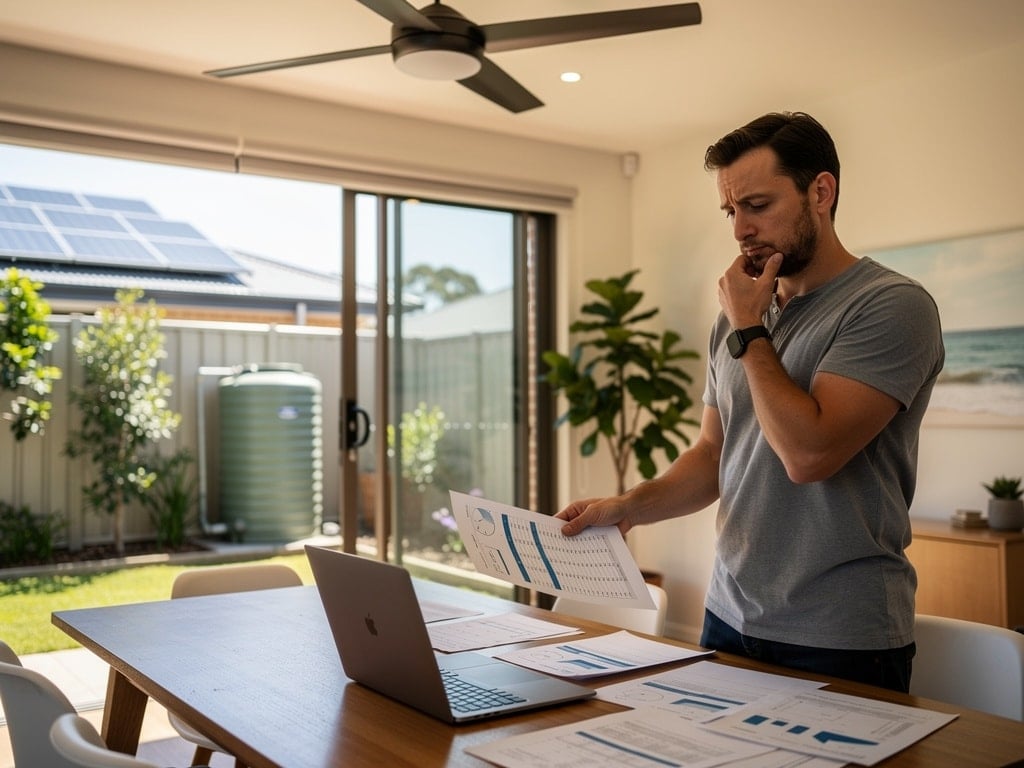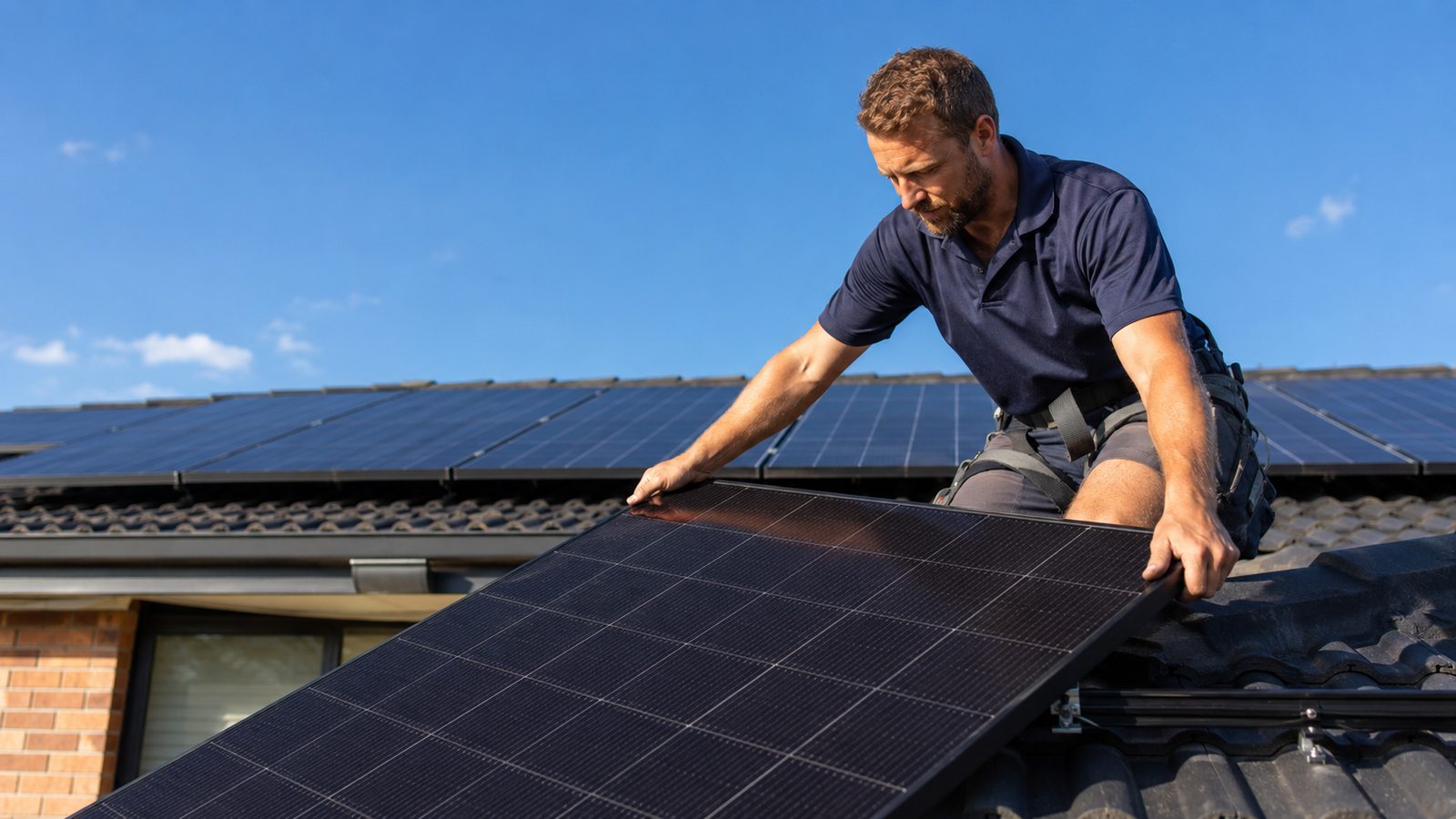

No net cost solar means your power bill savings are big enough to cover the monthly repayment on a financed system, so your total monthly spend stays about the same from day one. The panels are not free. You still pay for them, just spread out over time and offset by what you stop paying your retailer.
It's a real, legal way to get solar with nothing to pay upfront. It's also a phrase dodgy operators hide behind. Here's exactly how the money works, and how to tell a genuine offer from a scam.
At a glance
The difference between ‘no upfront’ and ‘no net cost’
These two phrases get thrown around like they mean the same thing. They don't, and the gap matters.
$0 upfront means you pay nothing on install day. The cost is financed, so you still owe it, just over time.
No net cost goes one step further. Your electricity savings are set up to roughly match the loan repayment, so your total monthly spend stays about where it was. You get the solar, and your out-of-pocket barely moves.
Neither one means free. It's real hardware and a real install with a real cost. That cost is just spread out and offset by what you stop paying the grid.
Check what you qualify for in 30 seconds
30 secs · Free · No obligationHow no net cost solar actually works
Here's the money, step by step.
1. The federal STC rebate comes off first. On a 6.6kW system that's roughly $2,000 to $4,200 off the price, applied as an upfront discount at install.
2. A state scheme stacks on top, if you have one. Some states add a rebate or an interest-free loan. Not every state does.
3. The rest is financed. A personal loan, a state green loan, or a payment plan spreads the balance over 3 to 7 years.
4. Your savings cover the repayment. A well-sized system cuts your power bill by enough to offset most or all of the monthly payment. That's where ‘no net cost’ comes from.
Is no net cost solar a scam?
The model itself is legitimate and common. Financing solar and letting the savings cover the repayment is how plenty of Australians go solar.
The words ‘free solar’ are where the trouble starts. Scamwatch and the ACCC both run live warnings about bogus ‘free solar’ and fake ‘government rebate’ offers.
Watch for these red flags:
Cold calls or door-knocks pushing a ‘government program’ that's ‘closing soon’
Anyone asking for bank details or an upfront fee to ‘process your rebate’
Claims that a retailer is ‘obligated’ to give you panels for nothing
‘Free panels in exchange for advertising signs on your roof’
Pressure to sign today, or a ‘quiz’ that only wants your personal details
A real offer puts the numbers in writing: system price, rebate amount, loan term, repayment, and estimated savings. No pressure, no vague ‘it's all covered’.
If an offer feels off, check Scamwatch and the ACCC's solar guidance before you sign anything.
See your real numbers, no cold calls
30 secs · Free · No obligation‘Free solar’ myths and the reality
How to know if you qualify
No net cost works best when a few things line up.
You own your home, or have the owner's approval. The roof gets decent sun. You use a fair bit of power. And you can pass a basic finance check.
If you rent, sit under heavy shade, or use very little electricity, the numbers may not reach true ‘no net cost’. An honest installer will tell you that straight.
That's the whole reason to check first. Put in your postcode and we'll show you the real rebate and finance picture for your place, then match you with one vetted installer. No pushy calls.
Check your no net cost eligibility
30 secs · Free · No obligationFrequently asked questions

Steve Hill
Steve Hill is a renewable-energy executive with a deep background in Australian solar and energy efficiency, spanning consulting, project management and business development. He founded Elite Smart Energy Solutions, a Clean Energy Council Approved Retailer focused on smarter, lower-cost energy for homes and businesses. Steve contributes to Energy Matters, one of Australia's longest-running solar publications, and has appeared on its Road to Zero podcast. He helps Australian homeowners cut through the noise on rebates, batteries and going solar.