
The panels look the same. The incentives do not.
A business claims solar through the same federal certificate scheme as a household, plus a set of tax breaks a homeowner never sees, and from 1 October 2026 the rules get a lot more generous for mid-size systems.
Here is every rebate, certificate and tax break your business can claim on solar in 2026, what each is worth, and how they stack.
At a glance
Quick answer: an Australian business going solar in 2026 can claim the federal STC rebate as an upfront discount (worth roughly 20% of the system cost) or LGCs for very large systems, and can also write the asset off or depreciate it against tax. From 1 October 2026 the STC scheme expands from 100 kW to 1 MW, so far bigger rooftop systems get the upfront discount. Exact value depends on system size, location and install date.
The 2026 change: STCs expand from 100 kW to 1 MW
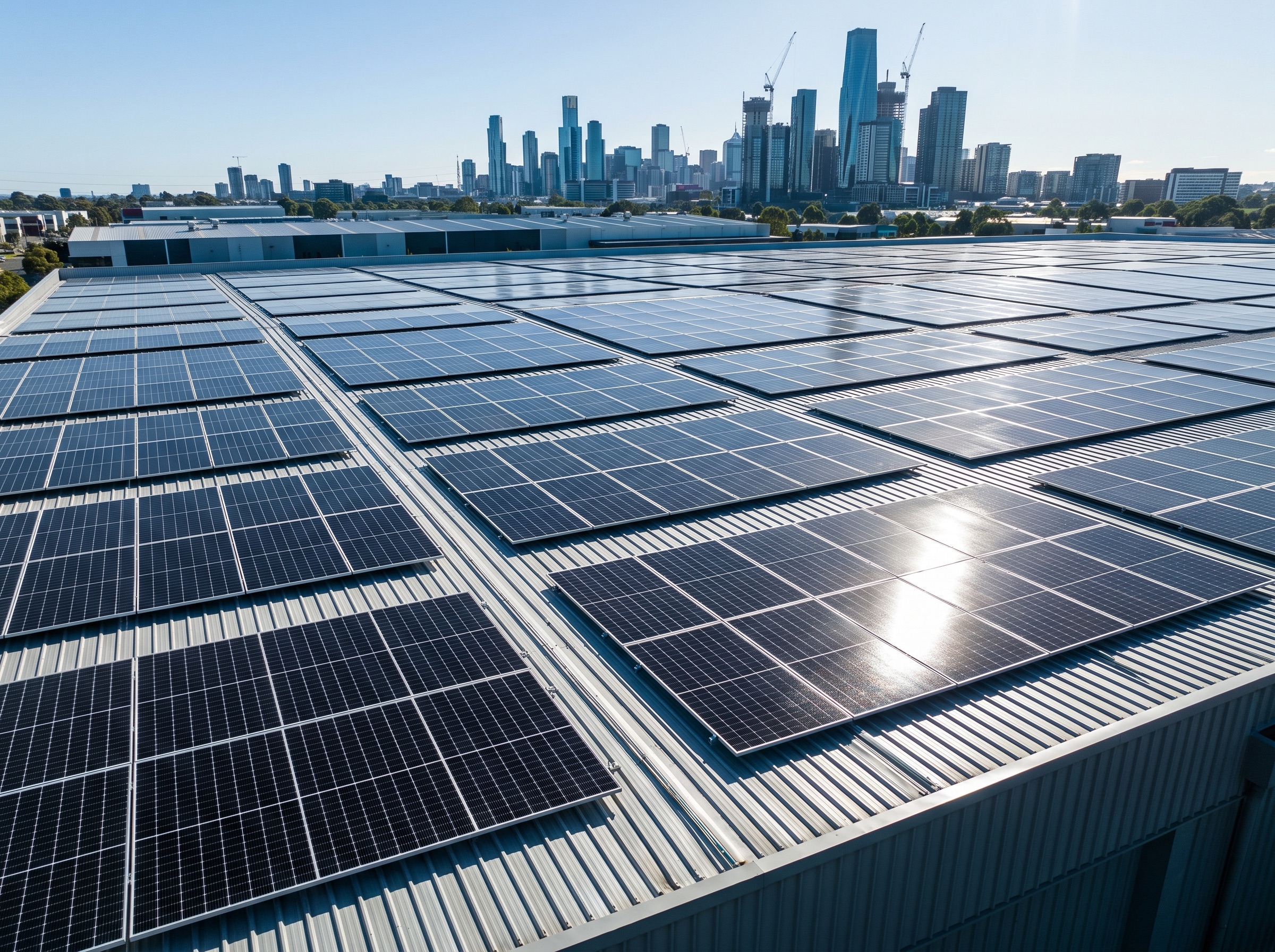
Quick answer: on 5 August 2026 the federal government announced that the Small-scale Renewable Energy Scheme (SRES) will expand from 100 kW to 1 MW (1,000 kW), so much larger commercial rooftop systems can claim the upfront STC discount. The change is expected to take effect 1 October 2026, and the government estimates it cuts the upfront cost of eligible systems by around 20%.
This is a big deal for mid-size businesses. Until now, anything over 100 kW had to rely on LGCs, which pay out slowly over years as the system generates. STCs instead come off the invoice on day one, which transforms the cashflow on a commercial install.
The five-year deeming rate is expected to hold to 31 December 2030, and existing large-scale systems already accredited under the LRET stay on LGCs. If your business has been sitting on a 150 kW or 400 kW rooftop project, the maths after 1 October 2026 is meaningfully better than it was.
STCs for commercial solar, and what they're worth
Small-scale Technology Certificates (STCs) are created upfront when your business installs an eligible solar system. The number you get depends on the system size, your STC zone (how much sun your location gets), and the years of generation deemed to 2030.
You almost never handle the certificates yourself. Your installer assigns them and gives you an upfront discount on the invoice equal to their value, so the STC rebate shows up as money off, not a rebate you claim back later.
For small-to-medium commercial systems, the STC rebate typically covers 15% to 25% of the gross cost. Some rough 2026 figures:
These are indicative. The STC spot price moves, and your zone and install date change the count, so treat any fixed figure as a guide and get a real quote for your roof and postcode.
LGCs: how larger systems have worked
Large-scale Generation Certificates (LGCs) come from the Large-scale Renewable Energy Target (LRET). Historically, any system over 100 kW created LGCs instead of STCs.
The key difference is timing. STCs are one upfront lump discount. LGCs are created as the system actually generates, one certificate per megawatt-hour, and sold on a fluctuating market over the life of the system. That means ongoing revenue, but slower payback and more admin than an upfront discount.
From 1 October 2026, new rooftop systems up to 1 MW can choose the STC route instead, which most mid-size businesses will prefer for the cashflow. Systems already accredited under the LRET keep generating LGCs as before.
The tax breaks a business gets and a home doesn't
On top of the certificate rebate, a business solar system is a depreciating asset, so it also reduces your tax bill. Two mechanisms matter:
Instant asset write-off. Eligible small businesses can immediately deduct the cost of assets under the current threshold, rather than depreciating them over years. Whether your system qualifies depends on the threshold in force, your turnover, and the system cost.
Depreciation. Systems above the write-off threshold are depreciated over their effective life, so the deduction is spread across several years. Either way, the after-tax cost of commercial solar is lower than the sticker price.
What commercial solar costs, and how fast it pays back
After the STC rebate, most small-to-medium commercial systems land between $8,000 and $130,000 depending on size, from a 10 kW system on a small shopfront to a 100 kW array on a warehouse.
Payback is usually faster than a home system, because a business uses most of its power in daylight hours when the panels are producing. Most commercial systems pay for themselves in 3 to 6 years, then run for another 15 to 20 years, and that is before the tax deduction is counted.
The single biggest lever on payback is self-consumption. A business that runs machinery, refrigeration, air conditioning or EV charging through the day gets far more from solar than one that exports most of it at a low feed-in rate.
How your business actually claims it
The process is simpler than it sounds, because your installer does most of it:
1. Get a commercial quote sized to your daytime power use, not just your roof space.
2. The installer assigns your STCs and applies the discount to the invoice, so you pay the net price.
3. Your accountant handles the write-off or depreciation at tax time.
The one step that trips businesses up is sizing. Get it wrong and you either leave capacity on the table or export cheap power you could have used. A vetted commercial installer sizes to your daytime load, and the check at the top of this guide matches you with one in about a minute.
Frequently asked questions

Steve Hill
Steve Hill is a renewable-energy executive with a deep background in Australian solar and energy efficiency, spanning consulting, project management and business development. He founded Elite Smart Energy Solutions, a Clean Energy Council Approved Retailer focused on smarter, lower-cost energy for homes and businesses. Steve contributes to Energy Matters, one of Australia's longest-running solar publications, and has appeared on its Road to Zero podcast. He helps Australian homeowners cut through the noise on rebates, batteries and going solar.